
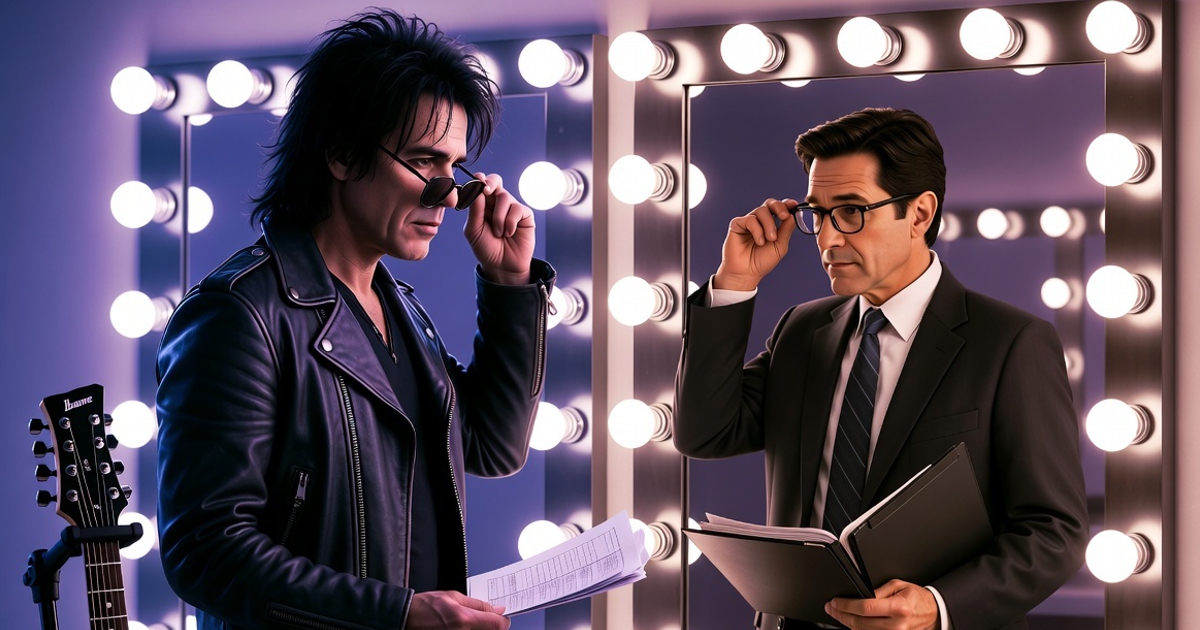
Why Do People Fear Their Accountant? (Don't Worry, I'm an Artist.)
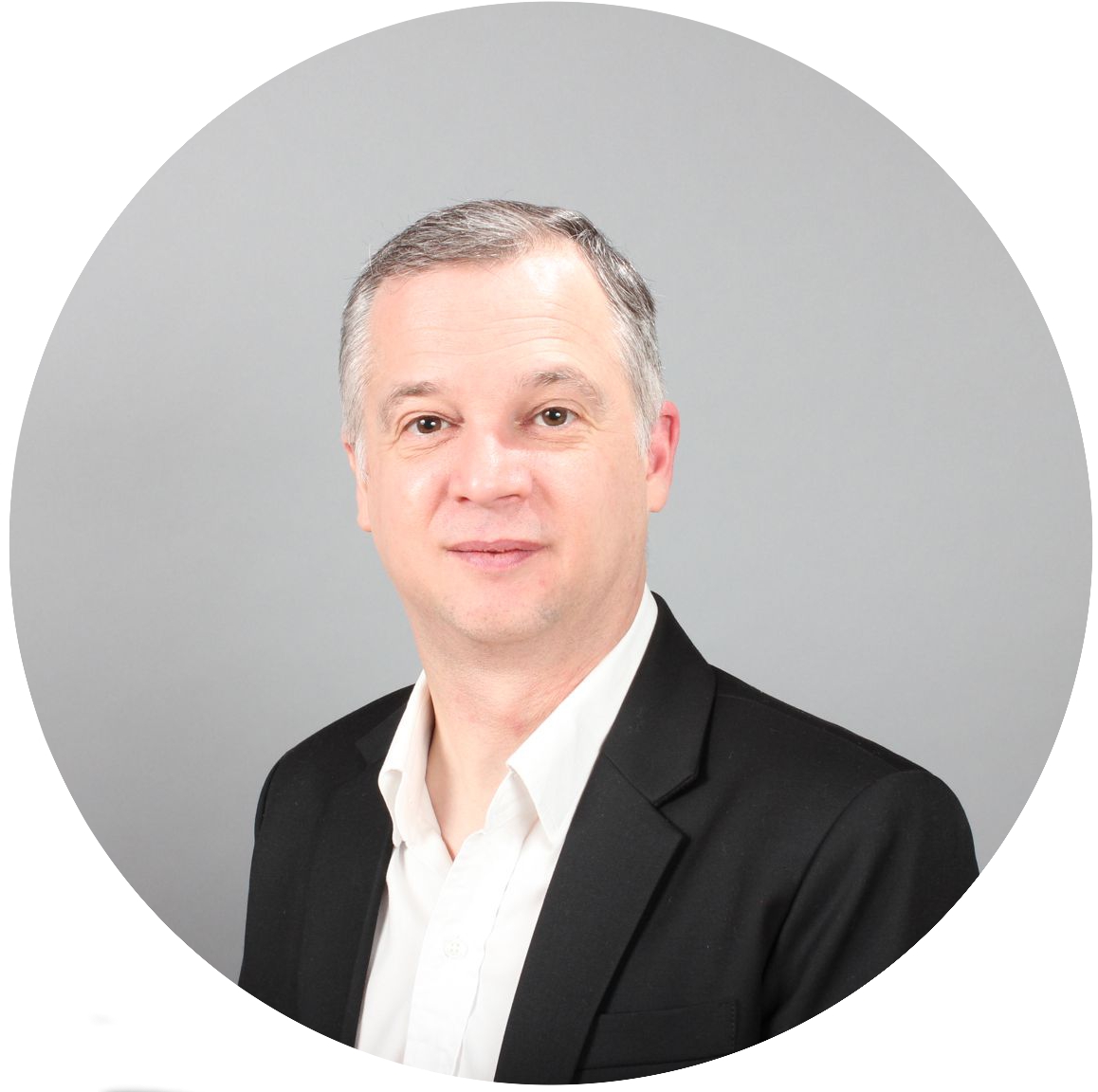
Wayne Willey
I've learned something over the years. If I tell someone I'm an accountant, the conversation changes immediately.
Body language shifts. People take a small step back. Eyes glaze over, or worse, a kind of low-level anxiety crosses their face, the same look someone gets when they remember they haven't done something they were supposed to do.
The smarter move, I've found, is to lead with the other side of who I am. I'm a creative person. I've performed on stage, played music, had a brief brush fame. Lead with that, and the conversation is completely different.
The accountant reveal comes later. And when it does, people are genuinely surprised because by then they already know me as a person, and I don't fit the box they had ready.
I've watched this play out with work colleagues too. People who knew I played music. People I personally invited to come and watch me perform. They came, they watched, and they were still completely gobsmacked.
They knew. They were invited. They watched. They were still surprised.
Even with advance notice, even with the knowledge and even with a direct invitation, the stereotype was so strong it overrode everything they actually knew about me.
That reaction tells you everything about how deep this fear runs. And honestly, I find it just as amusing as you do. Because it doesn't have to be that way.
Why Are People Scared of Their Accountant?
Let me be clear: the fear is real, and it's not irrational.
Research by Xero found that 54% of Australians worry about making a tax error, and 22% specifically fear being audited by the ATO. (Xero Tax Confidence Index, 2025)
More telling still: 29% of small business owners actively avoid meetings with their accountant or bookkeeper. (Xero Emotional Tax Return Report, May 2026)
That is nearly a third of business owneer, avoiding! That says something about the profession, not just the people.
And it shows up in outcomes. 69% of small business owners report being surprised by an unexpected tax result, usually a larger bill or a smaller refund than expected. (Xero, May 2026) That's not a tax problem. That's a communication problem. If your clients are consistently surprised, you're not doing your job properly.
So the fear exists. The numbers confirm it. But where does it come from?
The Jargon Problem
Walk into most accounting firms and within sixty seconds you'll hear terms like "amortisation of intangibles," "franking credit offsets," "Division 7A deemed dividends," and "adjusted taxable income thresholds."
Some of that language is necessary. Most of the time, it isn't.
In my opinion, and this is the opinion part, jargon in this industry is frequently weaponised. Not to inform clients, but to maintain distance. To create a sense that what's happening is so complex, so specialised, that only the initiated can possibly understand it. Which conveniently means you can't question it, can't benchmark it, and don't know whether you're getting value for what you're paying.
"I don't know what they do, so I can't get rid of them."
I've heard that more times than I can count. That's not a client relationship. That's dependency dressed up as expertise.
The Big 4 Haven't Helped
It would be dishonest not to acknowledge the elephant in the room.
In 2023, a Senate inquiry found that a senior PwC Australia partner had leaked confidential government tax plans to colleagues, who then used that information to market services to global clients including Google, Uber and Facebook. The fallout was significant, twelve partners including the CEO were forced out, and PwC ultimately sold its government advisory business for a single Australian dollar. (Senate inquiry findings, 2023; reported widely)
KPMG Australia followed, with ASIC opening investigations into partners over alleged audit leaks involving confidential board papers. (Reuters, 2026)
Deloitte admitted before a Senate committee to misuse of confidential information on multiple occasions. (Senate committee testimony, 2023)
These are not small businesses cutting corners. These are the biggest, most trusted names in the profession and the headlines they generated did lasting damage to the industry's reputation. When people hear "accountant" and feel uneasy, this is part of the reason why.
I'm not going to pretend otherwise. The stereotype exists because parts of the profession have earned it.
The Stereotype And Why I Find It Amusing
The grey suit. The six-minute billing. The impenetrable letter that somehow manages to say both everything and nothing. The sense that you're being processed rather than helped.
I studied accounting, got my degree, completed my CPA, and have worked across banking, hospitality, IT and data, recruitment, telecommunications, professional services, not-for-profits, and RTOs. I've led teams and run business functions across a wide range of industries. I've seen the inside of a lot of organisations.
I'm also a creative person. I've performed on stage. I've had colleagues who knew this, who came to watch, and who still couldn't reconcile it with the accountant they thought they knew. The stereotype is just that powerful.
That's not a complaint. It's a data point. And it's genuinely funny because the idea that an accountant can't also have a personality, can't also be curious, collaborative, or human - that's the assumption I get to dismantle every single time.
What I Actually Do
I'm an accountant. I do bookkeeping. But the way I work is probably not what you're expecting.
If I do something in your books and you want to know how I did it, I'll show you. If there's a better way for you to track something, I'll tell you. Whatever accounting software you're using, whatever you throw at me, I'll work with it. I'm not going to tell you to switch to something I prefer. I adapt to your business, not the other way around.
If you want to know how I did something, I'll show you. That's just how I work.
This isn't an accountant trying to extract your money and retain your dependency. It's a team effort. It's our language, not mine. You know your business better than anyone. I know the numbers side. I engage with you as a person, not as a file number and yes, that can be a little disarming if you're not expecting it.
The goal is never to make you reliant on me. The goal is to make you better informed, better protected, and frankly less stressed about the financial side of running your business.
And much like the magician who pulls a receipt from a hat instead of a rabbit, the mechanics aren't magic. They're just learned. The difference is I'm happy to show you how the trick works.
Numbers Without the Nonsense
I charge fixed prices. You can see exactly what things cost before you commit. There's no six-minute billing clock running in the background, no invoice at the end of the month that makes you wince. (See our pricing.)
I don't use jargon to justify my existence. When I use technical language, it's because the term is the right one, not because it sounds impressive.
And I come with something that's genuinely hard to find in this industry: real-world experience across real industries. Not just accounting firms. Actual businesses, actual problems, actual outcomes.
The Accountant You Actually Want
The fear that nearly a third of business owners feel around their accountant isn't a personal failing. It's a reasonable response to an industry that has, in too many cases, prioritised its own mystique over its clients' understanding.
You deserve better than that. A bookkeeper and accountant who explains what they're doing, charges you a fair price you knew upfront, has worked in enough industries to understand your context, and doesn't take themselves too seriously.
The goal is never to make you reliant on me. The goal is to make you better informed, better protected, and less stressed.
That's what Truaccounts is. That's what I am.
Still not sure? Have a look at what we offer, check the pricing, or get in touch. I promise the conversation won't make you take a step backwards.
Wayne Willey is the founder of TruAccounts, a bookkeeping and accounting services business working with small businesses across Australia. He is also, occasionally, the last person in the room people expect to have been on a stage.